Sports cards are the oldest of these hobbies and the most heavily documented, and the documentation is what a beginner should lean on. The manufacturers publish checklists and pull odds. Grading has a century of convention. The prices are public. The only thing nobody will tell you is what to collect, and that is the first decision.
Pick a lane, because the hobby is enormous
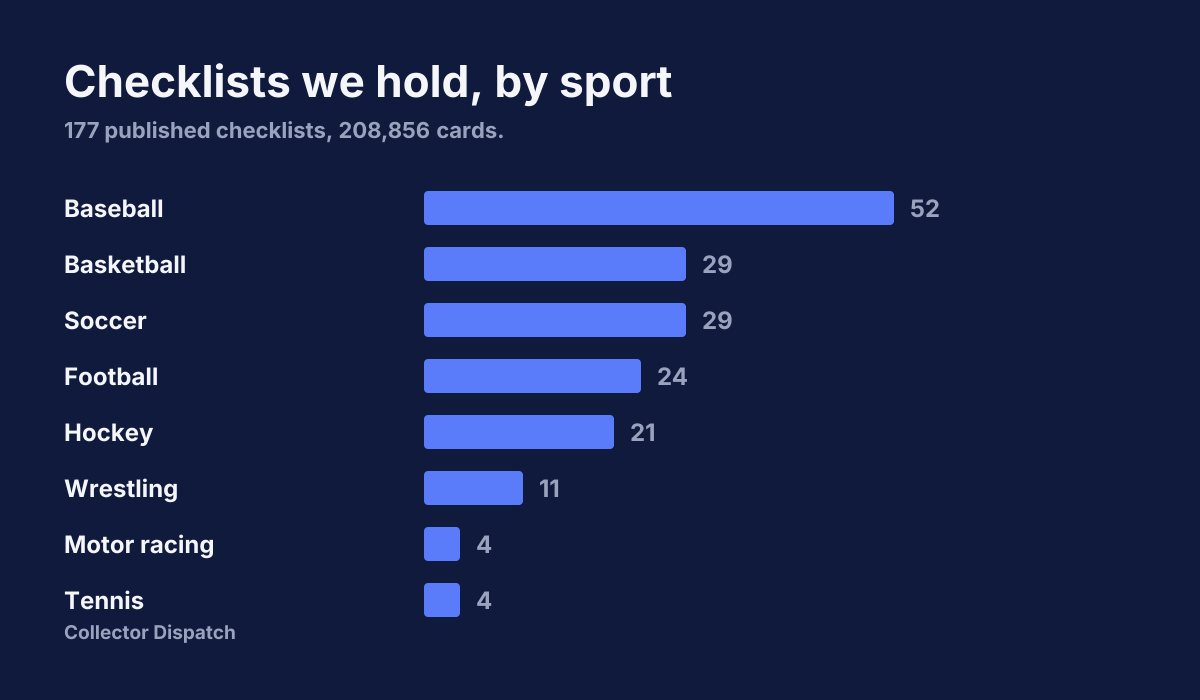
We hold 177 published checklists with a sport attached, 208,856 cards between them, and that is a fraction of what was printed. Baseball alone accounts for 52 of those sets. The usual lanes are a player, a team, a set, or a kind of card, and the point of choosing is that every one of them has an edge you can see.
| Lane | What you collect | What it costs | Where it ends |
|---|---|---|---|
| A player | Every card of one person | Climbs with their career | Never quite, which is the appeal |
| A set | Every base card of one release | Cheap per card, long to finish | At the checklist’s last number |
| A team | Current and past players of one club | Whatever you decide | Where you draw the line |
| Rookie cards | A player’s first licensed cards | The most expensive lane per card | One per player per year |
The vocabulary, briefly
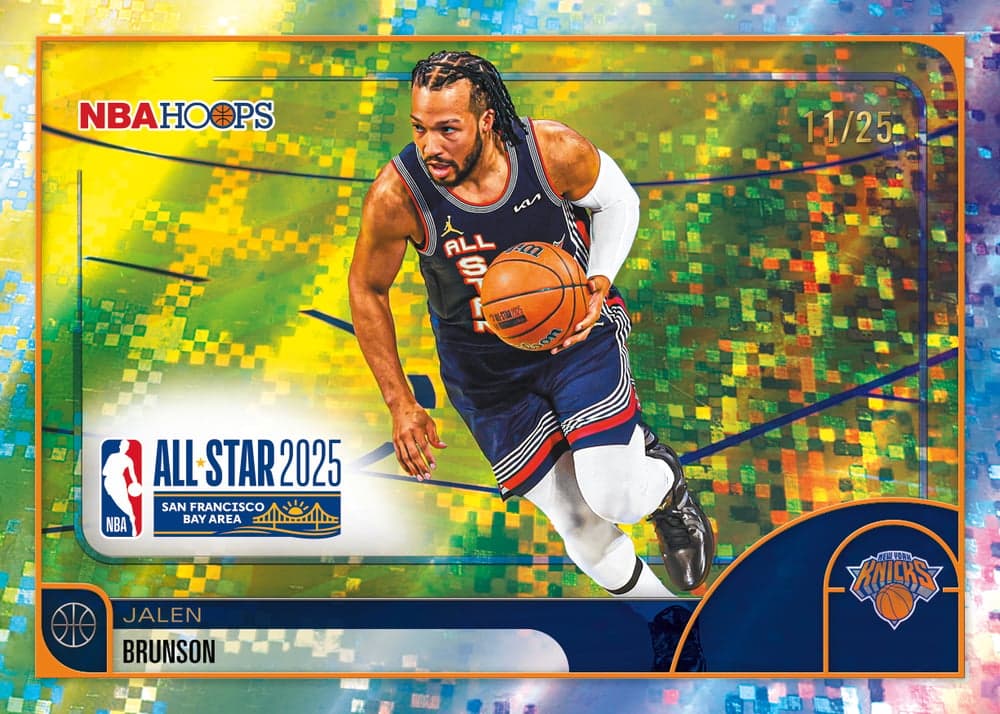
A base card is the ordinary card. A parallel is the same card in a different finish or colour, often serial-numbered. An insert is a card from a themed subset. An autograph is signed, on the card or on a sticker. A relic carries a piece of material. A rookie card is a player’s first card in a licensed set, marked RC. We have 23,752 autographs and 133,803 serial-numbered cards on file, which is the scale a modern set works at; the longer version is its own piece.
What the manufacturer tells you
Topps, Panini, Upper Deck and Leaf publish a checklist for each set and, for most, a sheet of stated pull odds: one autograph in so many packs, one of a given parallel in so many. We hold 157,492 of those ratios. Read them before you buy a box, because they are the only honest statement of what a box contains, and reading one takes ten minutes to learn.
Boxes, packs and singles
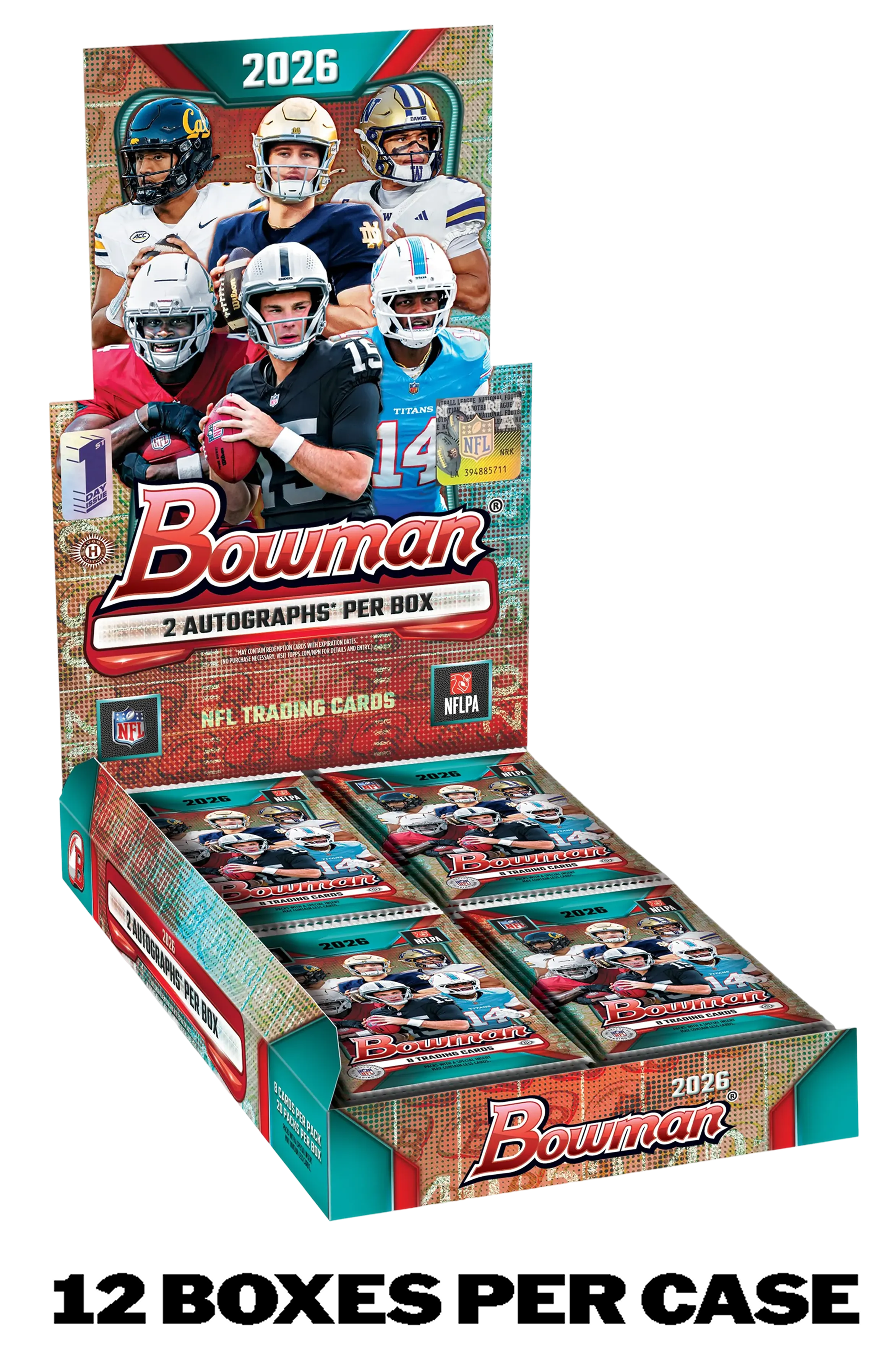
A hobby box is sold through card shops and carries the guaranteed hits. A retail blaster or hanger is sold in supermarkets with fewer. A single is one card, bought as itself. For any card you can name, the single is cheaper than the box that might contain it; the arithmetic does not change by sport.
Condition and grading
Four things: corners, edges, surface and centring. A raw card is what the seller says; a graded card, from PSA, Beckett, SGC, CGC or others, is what the label says, sealed in a case with a certificate number you can check. For a beginner, grading matters when buying anything expensive, where the label is the protection, and rarely when selling anything cheap, where the fee exceeds the premium. The companies compared is its own guide.
Protection, in one sentence
Penny sleeve first, then a toploader for anything you would mind bending, then a box in a room that does not swing with the seasons; the longer version exists and the order is the whole of it.
Where to buy
A card shop for boxes, advice and a look at the card before paying. Marketplaces for singles, with the seller’s photographs enlarged and the certificate checked on any slab. Card shows for volume and for haggling. Big-box retail for cheap packs when the shelf has any, which it often does not for the sets people want.
A way to start
One player you follow, or one current set from the sport you watch. Buy ten singles. Sleeve them. Read the set’s checklist on this site and its odds sheet, and you will know more about that set than most of the people selling it to you. Then decide whether you want the box.
Frequently asked questions
What should I collect first?
One player you follow or one current set from a sport you watch. A lane with a visible edge beats a drawer of everything.
What is a rookie card?
A player’s first card in a licensed set, usually marked RC. It is the most expensive lane per card because every collector of that player wants one.
Hobby box or retail?
Hobby boxes come through card shops with the guaranteed hits; retail blasters come from supermarkets with fewer. For a specific card, a single beats both.
Do I need to grade my cards?
When buying anything expensive, the grade is your protection. When selling anything cheap, the fee exceeds the premium. Check the certificate number of any slab on the grader’s own site.