The same story is sold three or four times: as monthly issues, then collected in paperback, then in hardcover, and sometimes years later as an omnibus. They are the same pages at very different prices, and which to buy depends on what you want from it.

The four formats
Single issue. The monthly comic, about twenty pages of story, stapled. First to arrive, and the format that collectors collect.
Trade paperback. Usually five or six issues in one softcover, published a few months after the last of them.
Hardcover. The same collection or a larger one in boards, sometimes oversized and with extras.
Omnibus or compendium. A whole run in one very large book, twenty-five issues or more.
What a page costs
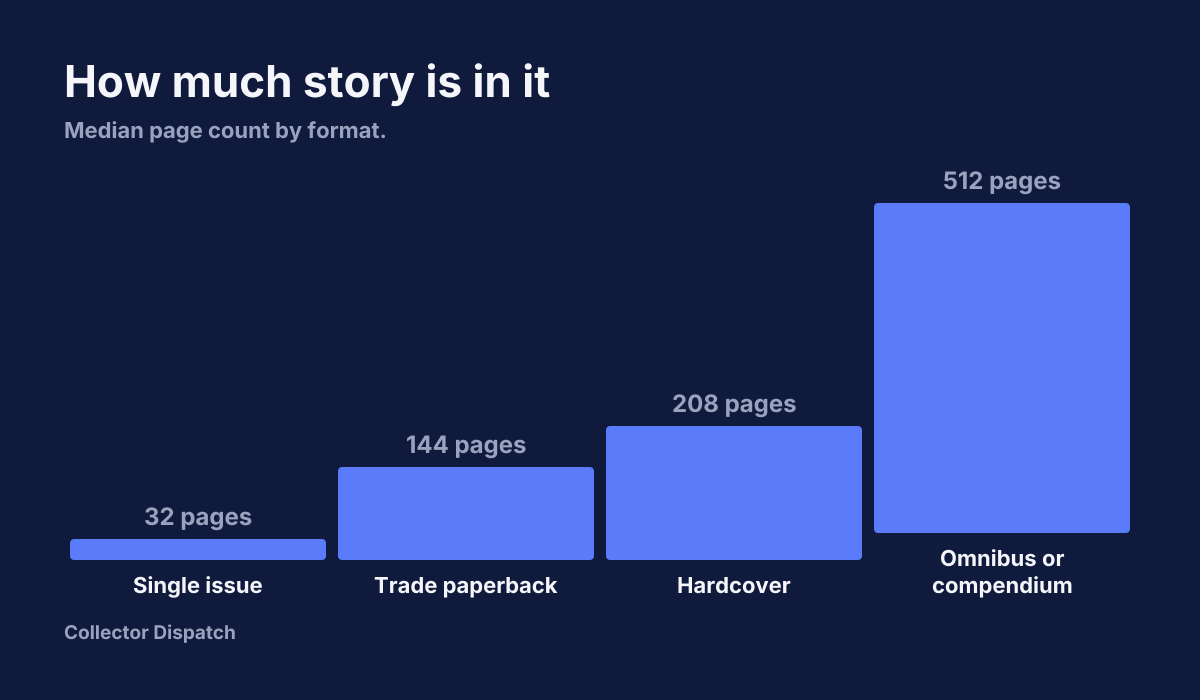
Image and Dark Horse both publish a page count with every book, so the cost of a page can be worked out rather than estimated. Across 1,490 priced books on their lists, read on 15 November 2026:
| Format | Books | Median price | Median pages | Cost per page |
|---|---|---|---|---|
| Single issue | 1,041 | $3.99 | 32 | 12.5¢ |
| Trade paperback | 265 | $16.99 | 144 | 11.5¢ |
| Hardcover | 138 | $49.99 | 208 | 20.8¢ |
| Omnibus or compendium | 46 | $34.99 | 512 | 7.4¢ |
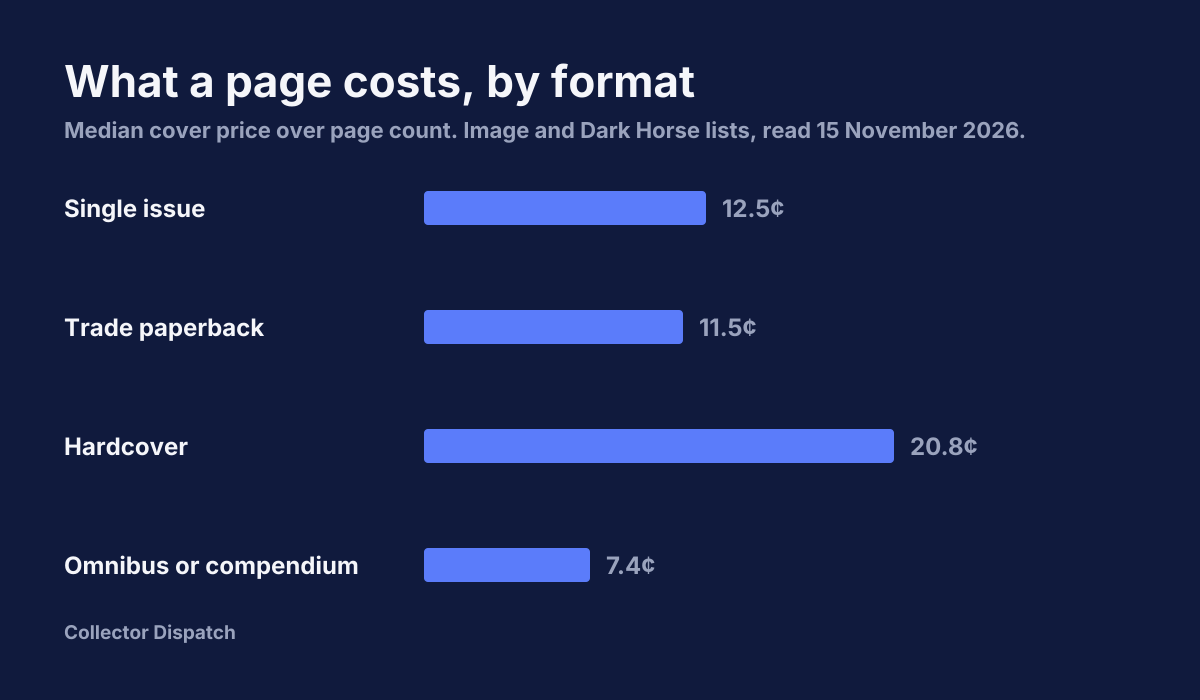
A hardcover costs 20.8¢ a page and omnibus or compendium 7.4¢. That is 2.8 times as much for the same page. A single issue’s page count usually includes advertisements and back matter and a collection’s mostly does not, so a single holds a little less story than its page count suggests.
The arithmetic on one story
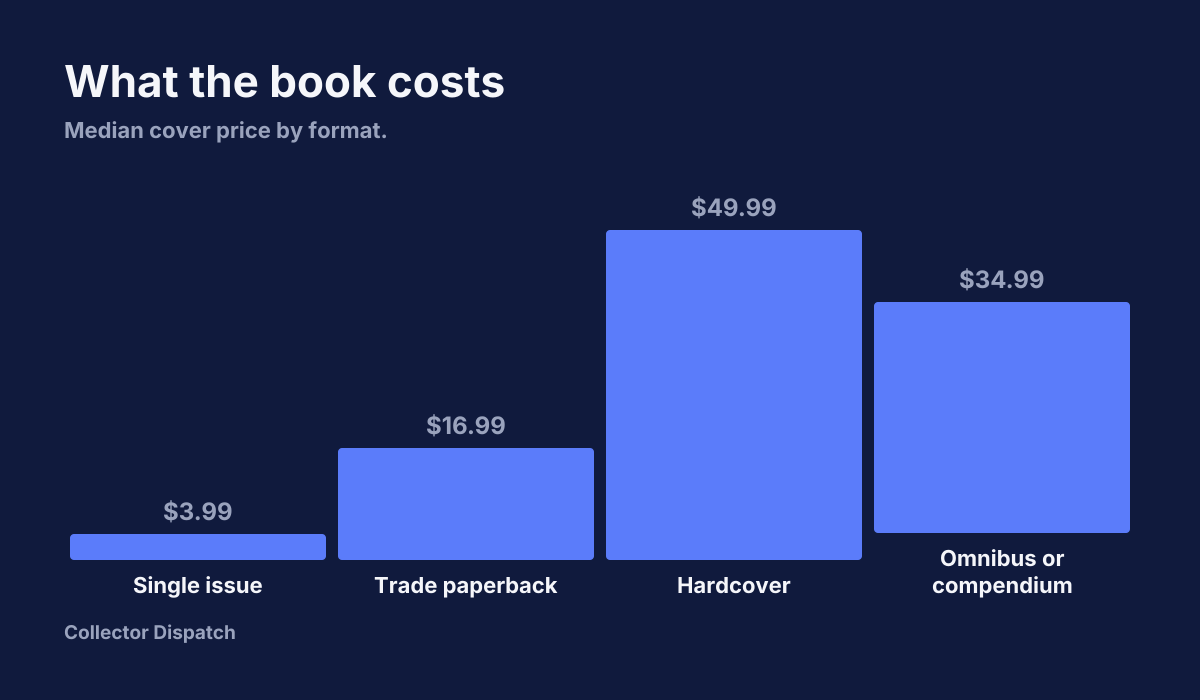
Six issues at the median single price of $3.99 is $23.94. The median trade paperback is $16.99 for 144 pages. Trades vary in how many issues they hold, so check what a particular volume collects, but the direction does not change: the collection is cheaper, and you wait for it.
What each format is actually for
Singles, if the object matters. First appearances, key issues and variant covers exist only as single issues, and the secondary market is a market in singles. A collected edition is a book to read, and is priced by what is in it rather than by scarcity.
Singles, if you want the series to continue. A new series lives or dies on its first few months of orders, and those are orders for issues. Waiting for the trade is a vote that arrives after the count.
Trades, if you want to read. Cheaper per page, no advertisements, stands on a shelf, stays in print. For anything already finished, this is the sensible way in.
Hardcovers, if you will keep it. Better paper, a sewn binding and often a larger page. Worth the premium for a book you will go back to, and not otherwise.
Omnibus, if you are sure. The cheapest page there is and the least practical object: heavy, awkward to read, and often printed once. An omnibus that goes out of print can cost far more than it did new, which is a reason to buy the ones you want when they appear and not a reason to buy ones you do not.
A sensible mix
Most people who have done this a while end up in the same place. Singles for the two or three series they cannot wait for, and for anything they are collecting as an object. Trades for everything else. A hardcover or an omnibus for the handful of runs they already know they love.
Frequently asked questions
Is it cheaper to buy trade paperbacks than single issues?
Per page, yes. Across 1,490 Image and Dark Horse books read on 15 November 2026, a single issue cost a median 12.5¢ a page and a trade paperback 11.5¢.
What is the difference between a trade paperback and an omnibus?
A trade collects one story arc, usually five or six issues. An omnibus collects a whole run, often twenty-five issues or more, in one large volume.
Are single issues worth more than trade paperbacks?
As collectables, yes. First appearances and variant covers exist only as single issues. A trade is priced as a book to read.