Coin collecting from the Mint is the one hobby here where the maker sells to you directly, states its limits in writing, and publishes a schedule a year ahead. That makes it unusually legible for a beginner, and it also means the usual advice about hunting for things applies less than the advice about reading.
The schedule is the hobby
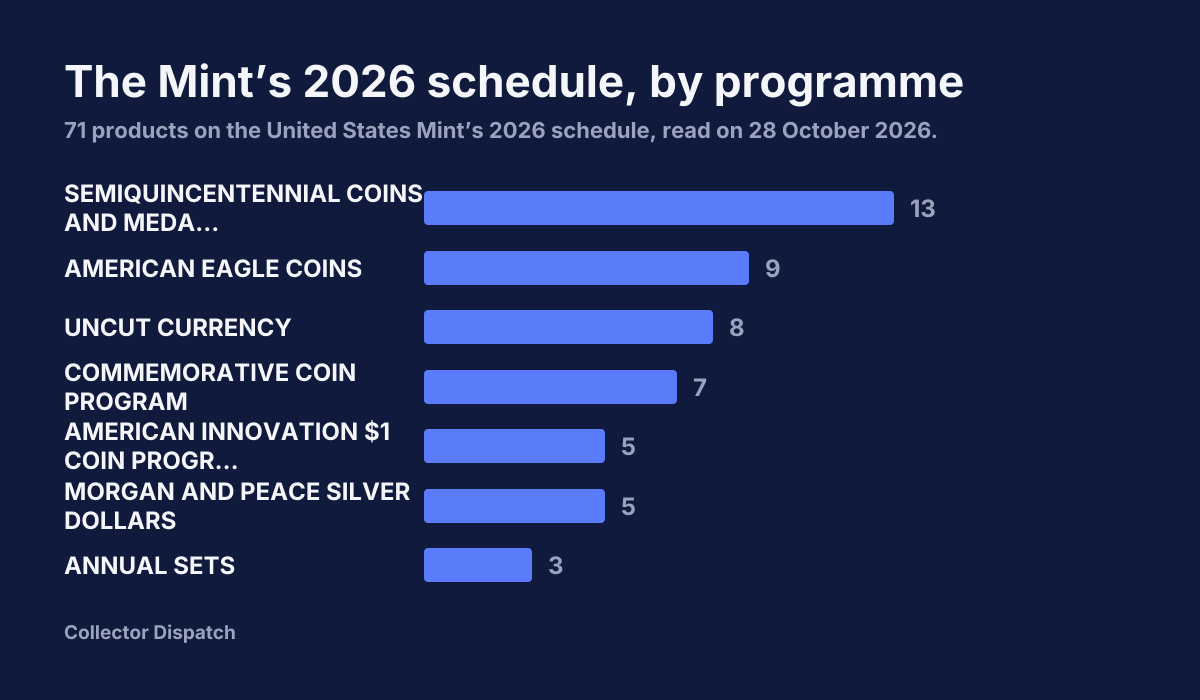
The United States Mint’s 2026 product schedule, read on 28 October 2026, listed 71 products: 53 across 9 named programmes, and 18 one-off medals and coins listed under none. The largest programme was SEMIQUINCENTENNIAL COINS AND MEDALS, with 13 products. 54 of the 71, 76%, carried a stated limit, and 4 were listed as coming without a date yet. Everything in this hobby starts from that page, and we publish the month ahead from it.
The words on a listing
| Term | What it means |
|---|---|
| Uncirculated | Struck on special presses for a sharp finish, not for spending. The entry-level collector coin. |
| Proof | Struck more than once on polished blanks: mirror fields, frosted design. The standard collector finish. |
| Reverse proof | The same technique inverted: frosted fields, mirrored design. |
| Enhanced, or Enhanced Reverse | A proof with selective frosting or polishing to pick out detail. |
| Mint mark: P, D, S, W | Philadelphia, Denver, San Francisco, West Point. The letter on the coin says where it was struck. |
| Product limit | The most the Mint will make. Household limit: the most one address may order, usually in the first days. |
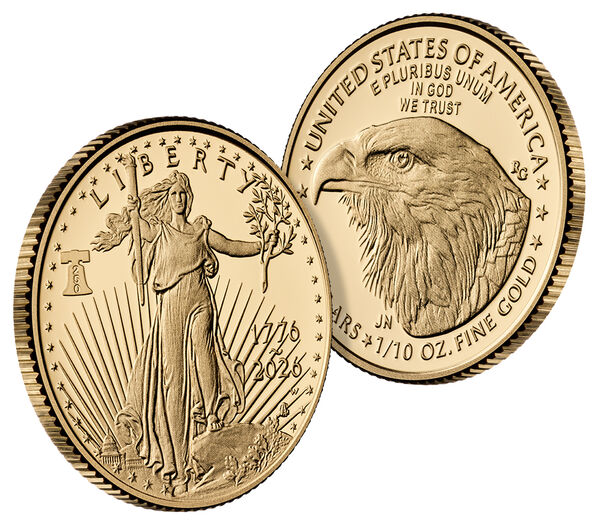
The mint mark matters more than it looks. 23 of this year’s products come from West Point, which strikes most of the precious-metal collector coins, and a W on a coin that is usually struck elsewhere is often the whole reason a collector wants it.
Buying at issue
Buy from the Mint on the on-sale day at the issue price, which is published with the schedule. For a limited product with a household limit, that day is the only day it is available at that price, and the aftermarket starts the same afternoon. For an unlimited product, there is no hurry and no premium, and the aftermarket will often be cheaper than the Mint once the Mint has moved on.
Original packaging
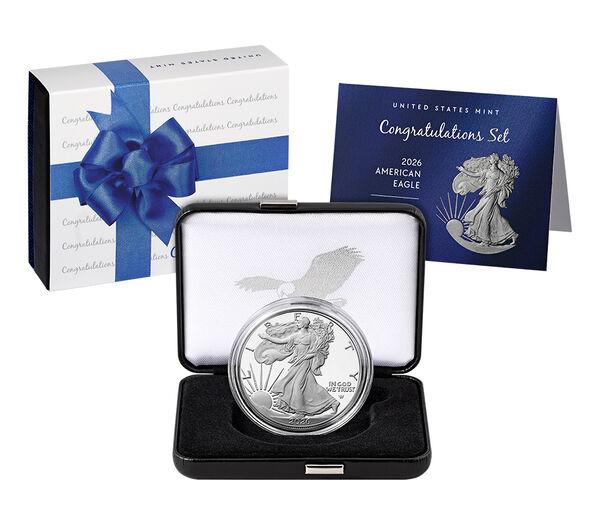
Keep it. The box, the capsule, the certificate of authenticity. A Mint product without its packaging is a coin; with it, it is the product the Mint sold, and the difference shows in the price every time one changes hands. Store the box closed, flat, out of light, in a dry cupboard, and do not open the capsule.
Do not clean a coin
Ever. Not with a cloth, not with a dip, not with anything. Cleaning leaves hairlines a grader sees instantly and marks the coin as cleaned forever, which takes it out of the collector market. Toning, the colour a coin develops with age, is not dirt and is often prized. Hold coins by the edge, over something soft, and otherwise leave them in their capsules.
Grading and slabs
NGC and PCGS grade coins on a seventy-point scale and seal them in a labelled holder. A modern Mint proof in its original box is already in known condition and does not need grading to be sold; a top grade, a 70, carries a premium on some issues and the fee to find out is small against a precious-metal coin. The certificate number on any slab checks on the grader’s own site, and you should check it.
Bullion is a different purchase
The Mint also strikes bullion coins, American Eagles and Buffalos, sold through dealers at the metal price plus a small premium. Those are a way of owning gold or silver, not a collectible in the sense of this guide, and a bullion Eagle and a proof Eagle of the same year are different products with different prices. The schedule separates them; so should you.
A way to start
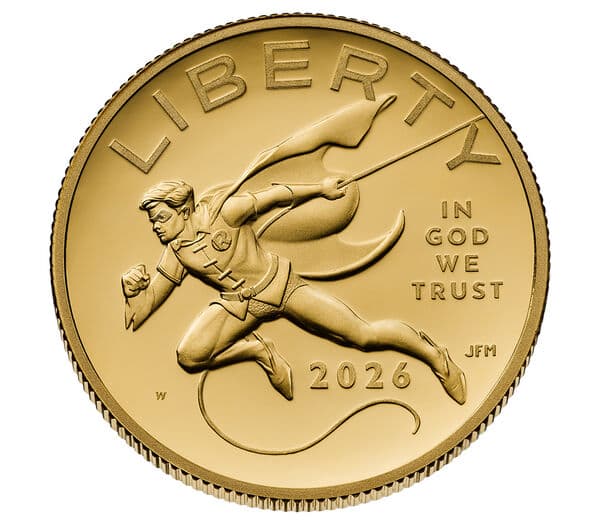
Read the schedule. Pick one programme, the quarters, the Innovation dollars, the Comic Art coins, whatever you will enjoy reading about. Buy at issue, keep the box, and never clean anything. The Mint will tell you what is coming and how many it will make, which is more than any other maker in this hobby does.
Frequently asked questions
What is the difference between proof and uncirculated?
Both are collector finishes. Proof coins are struck more than once on polished blanks for mirror fields and frosted relief. Uncirculated coins are struck once on special presses for a sharp, satin finish.
Should I clean an old coin?
Never. Cleaning leaves hairlines a grader sees at once and marks the coin as cleaned forever. Toning is not dirt and is often valued.
Does the original box matter?
Yes. A Mint product with its box, capsule and certificate is the product the Mint sold, and sells for more than the coin alone every time.
What is a household limit?
The most one address may order of a product, usually enforced in the first days of sale. It is how the Mint spreads a limited issue across buyers.